
General Surgery
Hernia Repair in Antalya
Repair of inguinal, umbilical, incisional and hiatal hernias — laparoscopically or open, with mesh reinforcement where indicated, by Dr. Mani Habibi in Antalya.
Ask Dr. Habibi a Question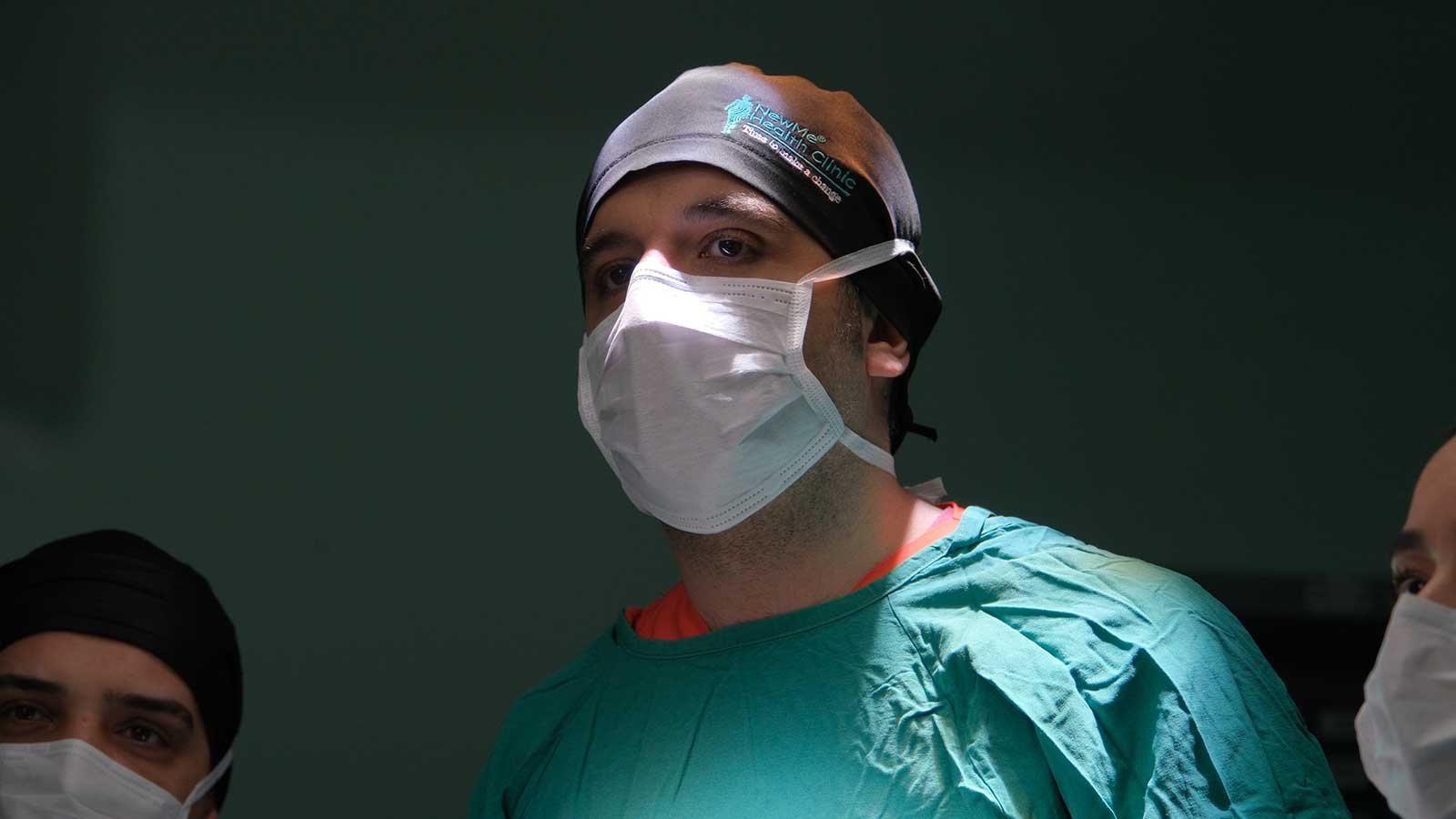
- Procedure
- Laparoscopic or open repair, usually with mesh
- Anaesthesia
- General or spinal, depending on type
- Operating time
- Approximately 45–90 minutes
- Hospital stay
- Same day or 1 night
- Return to work
- Desk work in 1–2 weeks
What is a hernia?
A hernia occurs when an internal organ or fatty tissue pushes through a weak point in the surrounding muscle or connective tissue. It usually appears as a bulge that becomes more visible on standing, coughing or straining, and may disappear when lying down. Hernias do not heal on their own and cannot be cured with exercise, belts or medication — surgical repair is the only definitive treatment.
The most common types are inguinal (groin) hernia, which accounts for the majority of cases and is far more frequent in men; umbilical hernia around the navel; incisional hernia at the site of a previous operation; and hiatal hernia, where part of the stomach moves up through the diaphragm, often causing reflux rather than a visible bulge.
What are the symptoms of a hernia?
Symptoms vary with the type and size of the hernia, and some cause no discomfort at all:
- A visible bulge or swelling in the groin, at the navel or over a previous scar, often more obvious when standing
- Aching, dragging or burning discomfort, typically worse at the end of the day or after lifting
- Worsening on coughing, straining or exercise, easing when lying down
- With hiatal hernia: heartburn, acid reflux and difficulty swallowing rather than a bulge
Hernias tend to enlarge slowly over time. Repair is generally advised where a hernia causes symptoms, is growing, or carries a meaningful risk of complications. Small, painless hernias in people with significant medical risks are sometimes monitored instead — a decision made individually.
Seek emergency care immediately if: the bulge becomes hard, very painful and cannot be pushed back, particularly with nausea, vomiting or redness of the overlying skin. This may mean the hernia is strangulated — the blood supply to trapped tissue is cut off — which requires emergency surgery.
How is hernia repair performed?
Assessment
Diagnosis is usually made on examination. Ultrasound or CT is used where the findings are unclear, and endoscopy for suspected hiatal hernia.
Choosing the approach
Laparoscopic repair suits many groin and recurrent hernias; open repair may be better for large or previously operated hernias. This is decided case by case.
Reducing the hernia
The protruding tissue is returned to its normal position and the defect in the muscle wall is exposed and measured.
Mesh reinforcement
A synthetic mesh is positioned to strengthen the weakened area, markedly reducing the chance of recurrence compared with stitch-only repair.
What does recovery look like?
What is mesh, and is it safe?
Mesh is a synthetic sheet that reinforces the weakened tissue while the body grows its own connective tissue into it. Its use has substantially reduced recurrence rates compared with repairs using stitches alone, and it is standard practice in most adult hernia surgery. Complications specific to mesh — chronic discomfort, infection or, rarely, migration — do occur in a small minority of cases. Where a hernia is very small, or in particular circumstances such as an infected field, a repair without mesh may be more appropriate. This is discussed before surgery.
What are the risks of hernia repair?
Hernia repair is a common operation with a good safety record, but it carries risks:
- Early: bleeding, bruising, wound infection, fluid collection (seroma) at the repair site
- Later: chronic groin pain in a minority of patients, numbness from nerve irritation, and recurrence of the hernia
- Uncommon: injury to nearby structures, and in men, swelling of the testicle or, rarely, effects on the blood supply
Chronic post-operative pain deserves particular mention: a small proportion of patients experience discomfort that lasts beyond the expected recovery period, most often after groin hernia repair. Careful surgical technique reduces this risk but does not eliminate it entirely.
Which hernia types are treated?
| Hernia type | Where it occurs | Usual approach |
|---|---|---|
| Inguinal (groin) | Groin, more common in men | Laparoscopic or open, with mesh |
| Femoral | Upper thigh, more common in women | Repair advised early — higher strangulation risk |
| Umbilical | Around the navel | Open or laparoscopic, mesh by size |
| Incisional | At a previous surgical scar | Often laparoscopic with mesh |
| Hiatal | Stomach through the diaphragm | Laparoscopic repair, often with anti-reflux procedure |
| Recurrent | Return after previous repair | Approach depends on the first operation |
This table is a general guide only. The right approach depends on the size and position of the hernia, your general health, occupation and any previous operations. See other general surgery treatments.

General surgeon specialising in obesity and metabolic surgery in Antalya, Türkiye. Trained in bariatric surgery at the Cleveland Clinic (USA), recipient of the EAES Fellowship Award 2018, IFSO member, co-author of 40+ peer-reviewed publications. Full profile →
FAQ
Hernia repair — frequently asked questions
Can a hernia heal without surgery?
No. A hernia is a physical defect in the muscle wall and cannot close by itself. Exercise, belts and medication may ease symptoms temporarily but do not repair the defect; surgery is the only definitive treatment.
How long does hernia surgery take?
Most hernia repairs take between 45 and 90 minutes, depending on the type, size and whether the hernia is recurrent. Many patients go home the same day or after one night.
Is mesh always used in hernia repair?
Mesh is used in most adult hernia repairs because it substantially lowers the risk of recurrence. It is not always appropriate — very small defects, some paediatric cases and infected fields may be better repaired without it. The plan is discussed before surgery.
When can I lift weights or return to sport?
Light activity and walking start immediately, but heavy lifting and abdominal exercise are usually avoided for four to six weeks while the repair strengthens. Return to sport and heavy physical work is generally around six to eight weeks, confirmed at follow-up.
Can a hernia come back after repair?
Recurrence is possible but uncommon after modern mesh repair. The risk is higher with large or previously repaired hernias, and where smoking, obesity, chronic cough or constipation continue to place strain on the repair.
Is hernia repair done under general anaesthesia?
Laparoscopic repair requires general anaesthesia. Open repair of a groin hernia can often be done under spinal or, in selected cases, local anaesthesia. The choice is made with the anaesthetist based on the hernia and your general health.
How long should international patients stay in Antalya?
Four to five days is usually sufficient for a planned hernia repair, covering pre-operative tests, surgery, recovery and a wound check before flying home. Longer stays may be advised for large or recurrent hernias.
Related Treatments
Other general surgery treatments
Questions about your hernia?
Describe your symptoms and how long the bulge has been present, with any imaging you have. Dr. Habibi will review them personally and advise on the right approach.
Message on WhatsApp