
Obesity & Metabolic Surgery
Gastric Balloon in Antalya
A non-surgical, temporary weight loss option placed endoscopically by Dr. Mani Habibi — for patients who are not candidates for surgery or prefer a reversible first step.
Ask Dr. Habibi a Question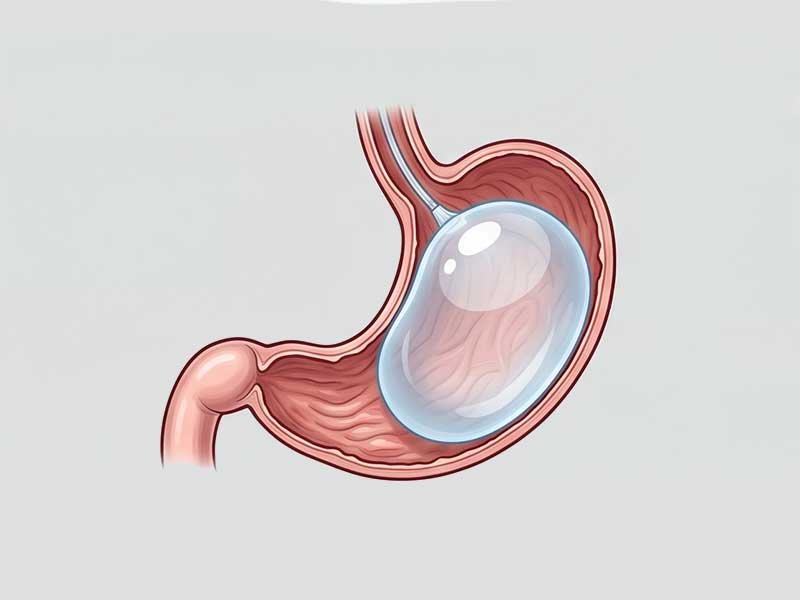
- Procedure
- Endoscopic — no incisions, no surgery
- Sedation
- Light sedation
- Placement time
- Approximately 15–30 minutes
- Hospital stay
- Same day, no overnight stay
- Duration in place
- Usually 6 months, then removed
What is a gastric balloon?
A gastric balloon is a soft silicone balloon placed into the stomach through the mouth using an endoscope and then filled with sterile saline, typically to 400–700 ml. It occupies space in the stomach so that smaller meals produce a feeling of fullness. No incisions are made and nothing is permanently altered: the balloon is removed after approximately six months, making it the only fully reversible option among weight loss procedures.
The balloon is not a stand-alone treatment. It is best understood as a six-month window in which a structured diet and exercise programme is easier to follow. Long-term results depend almost entirely on the habits built during that window, which is why dietitian support throughout the period is essential.
Who is a gastric balloon suitable for?
A gastric balloon may be considered for:- BMI of 27–35, where surgery is not indicated but diet alone has not worked
- Patients with a higher BMI who need to lose weight before another operation, to reduce anaesthetic and surgical risk
- Those who are not suitable for surgery for medical reasons, or who decline it
- Patients ready to follow a structured diet and follow-up programme for the full six months
A gastric balloon is not suitable for everyone. Large hiatal hernia, significant reflux or oesophagitis, previous gastric surgery, active ulcers, pregnancy and some medications are contraindications. Suitability is confirmed by an endoscopic examination and medical assessment — never online.
Important: A gastric balloon is a temporary aid, not a cure for obesity. Weight regain after removal is common where eating habits have not changed. It should be seen as one supported step within a longer treatment plan.
How is a gastric balloon placed and removed?
Assessment and endoscopy
Blood tests and a diagnostic gastroscopy confirm that the stomach and oesophagus are suitable and rule out ulcers or a large hiatal hernia.
Placement
Under light sedation, the deflated balloon is guided through the mouth into the stomach with an endoscope. No incisions are made.
Filling
The balloon is filled with sterile saline — usually 400–700 ml — often with a dye that would colour the urine if a leak ever occurred.
Removal after six months
In a second short endoscopic session under sedation, the balloon is emptied and withdrawn through the mouth. Patients go home the same day.
What are the first weeks like?
How much weight can be lost with a gastric balloon?
Published studies commonly report an average loss of 10–15% of total body weight, or roughly 12–20 kg, over the six months a balloon is in place — considerably less than bariatric surgery achieves. Results depend heavily on dietary adherence and follow-up, and a proportion of patients regain weight after removal if eating habits have not changed. No specific outcome can be guaranteed.
What are the side effects and risks?
The gastric balloon avoids surgical risk, but it is not risk-free:
- First days (very common): nausea, vomiting, cramping and reflux as the stomach adapts
- Ongoing: persistent reflux, gastritis or stomach ulceration; intolerance requiring early removal in a small number of patients
- Rare but serious: balloon deflation with migration into the intestine, which can cause obstruction and require intervention
One point deserves emphasis: the balloon must be removed on schedule. Leaving it in place beyond the recommended period significantly increases the risk of deflation and migration. Patients who travel for the procedure should plan for removal from the outset.
Gastric balloon or bariatric surgery?
| Aspect | Gastric Balloon | Bariatric Surgery |
|---|---|---|
| What is changed | Nothing — a device occupies space temporarily | Anatomy is permanently altered |
| Procedure type | Endoscopic, no incisions, sedation only | Laparoscopic surgery, general anaesthesia |
| Duration | Temporary — about 6 months | Permanent |
| Expected weight loss | Around 10–15% of total body weight | Substantially greater and more durable |
| Reversibility | Fully reversible | Sleeve not reversible; bypass rarely reversed |
| Often considered for | Lower BMI, pre-surgical weight loss, unsuitable for surgery | BMI 35+ or metabolic disease |
The balloon and surgery answer different questions. Which is appropriate depends on BMI, medical history, previous attempts at weight loss and personal preference — decided together during consultation. Read more about gastric sleeve surgery.
General surgeon specialising in obesity and metabolic surgery in Antalya, Türkiye. Trained in bariatric surgery at the Cleveland Clinic (USA), recipient of the EAES Fellowship Award 2018, IFSO member, co-author of 40+ peer-reviewed publications. Full profile →
FAQ
Gastric balloon — frequently asked questions
Is gastric balloon placement painful?
Placement is done under light sedation and takes about 15 to 30 minutes, so the procedure itself is not felt. Cramping and nausea in the first few days afterwards are common as the stomach adapts, and medication is prescribed to manage them.
How long does a gastric balloon stay in?
Most balloons are designed to remain in place for approximately six months and must then be removed endoscopically. Leaving a balloon in beyond its recommended period increases the risk of deflation and migration.
How much weight is lost with a gastric balloon?
Published studies commonly report an average loss of 10–15% of total body weight, roughly 12 to 20 kg, over six months. Results vary widely and depend on how closely the accompanying diet and exercise programme is followed.
Will I regain the weight after the balloon is removed?
Some regain is common if eating habits return to what they were before. Appetite returns to its previous level once the balloon is out, so the six months in place should be used to establish lasting dietary changes with dietitian support.
Do I need to travel to Antalya twice?
Yes — once for placement and again about six months later for removal, as both are endoscopic procedures. Each visit is short, typically requiring two to three days. Removal can sometimes be arranged with a qualified endoscopist closer to home, which should be planned in advance.
Is a gastric balloon surgery?
No. The balloon is placed endoscopically through the mouth under sedation, with no incisions and no changes to the anatomy of the stomach. This is why it leaves no scars and is fully reversible.
Can a gastric balloon cause reflux?
It can. Reflux is a recognised side effect, which is why patients with significant pre-existing reflux, oesophagitis or a large hiatal hernia are generally not considered suitable candidates. A gastroscopy before placement is used to check for this.
Related Procedures
Other bariatric options
Is a gastric balloon right for you?
Suitability requires an endoscopic assessment. Send your questions and medical background — Dr. Habibi will review them personally.
Message on WhatsApp