General Surgery
Thyroid & Breast Surgery in Antalya
Assessment and surgical treatment of thyroid nodules, goitre and breast lumps — with the emphasis on establishing a clear diagnosis before any operation is considered.
Ask Dr. Habibi a Question
- Conditions
- Thyroid nodules, goitre, breast lumps
- Anaesthesia
- General; local for some breast biopsies
- Operating time
- Thyroid 1.5–3 h · Breast 30–90 min
- Hospital stay
- Thyroid 1–2 nights · Breast often same day
- Return to work
- Typically 1–2 weeks
Which thyroid and breast conditions are treated?
The thyroid is a butterfly-shaped gland at the front of the neck that regulates metabolism. Nodules within it are extremely common — found in a large proportion of adults on ultrasound — and the great majority are benign. Surgery is considered where a nodule is suspicious on biopsy, is large enough to press on the windpipe or oesophagus, causes an overactive thyroid that cannot be controlled medically, or is growing.
In the breast, most lumps are benign — fibroadenomas, cysts and areas of fibrous change are far more common than cancer, particularly in younger women. The purpose of assessment is not to assume the worst, but to reach a definite answer. Where a lesion is confirmed benign and causing no problems, it can often simply be observed rather than removed.
When should a lump be checked?
Any new lump deserves assessment. The following in particular should be examined without delay:
- Breast: a new lump, a lump that is hard or fixed, skin dimpling or puckering, nipple change or inward turning
- Breast: blood-stained nipple discharge, persistent one-sided pain, or a lump in the armpit
- Thyroid: a visible or growing swelling in the neck, hoarseness that persists, or difficulty swallowing or breathing when lying flat
- Thyroid function: unexplained weight change, palpitations, tremor, unusual fatigue or feeling cold — these point to thyroid activity rather than a lump
The single most important message here is that assessment is straightforward and usually reassuring. Most lumps in both the breast and the thyroid turn out to be benign. Delaying because of anxiety is what turns a manageable situation into a difficult one — and in the great majority of cases, the delay was for nothing.
Seek urgent assessment if: a neck swelling is enlarging rapidly, or there is difficulty breathing or swallowing. In the breast, sudden redness, swelling and heat of the whole breast also needs prompt review.
How is the diagnosis made?
Examination and ultrasound
Clinical examination followed by ultrasound, which characterises the lesion — its size, structure and features that determine whether biopsy is needed.
Blood tests and mammography
Thyroid function tests for neck nodules; mammography alongside ultrasound for breast assessment in appropriate age groups.
Needle biopsy
Fine-needle or core biopsy under ultrasound guidance, performed with local anaesthesia. This is what turns uncertainty into a definite diagnosis.
Deciding together
The findings determine the plan: observation, removal of the lesion, or referral into a multidisciplinary team where a malignancy is confirmed.
What does recovery look like?
Does every nodule or lump need removing?
No — and this is worth stating plainly, because many people arrive expecting surgery. Most thyroid nodules are benign, cause no symptoms and are simply monitored with periodic ultrasound. Most breast lumps in younger women are benign and, once confirmed, often need no removal at all. Surgery is indicated where biopsy is suspicious or inconclusive, where a nodule is large enough to press on surrounding structures, where thyroid overactivity cannot be controlled, or where a lesion is growing. Recommending an operation that is not needed is as much a failure as missing one that is.
What are the risks of surgery?
Risks differ between the two areas and are discussed in detail before any decision:
- Both: bleeding, wound infection, fluid collection, and reaction to anaesthesia
- Thyroid-specific: hoarseness from irritation of the nerve to the voice box, usually temporary but occasionally lasting, and low calcium from effects on the parathyroid glands
- Breast-specific: a change in breast contour depending on how much tissue is removed, numbness near the scar, and occasionally a seroma requiring drainage
Two structures dominate thyroid surgery: the nerve supplying the voice box, and the four tiny parathyroid glands that control calcium. Protecting them is what determines the pace of the operation. This is why thyroid surgery is performed deliberately and unhurriedly rather than quickly.
Which finding leads to which approach?
| Finding | Usual approach | Reason |
|---|---|---|
| Small benign thyroid nodule | Ultrasound monitoring | Most never cause problems |
| Large goitre with pressure | Surgery | Compression of windpipe or oesophagus |
| Suspicious or unclear biopsy | Surgical removal | Definitive diagnosis needed |
| Uncontrolled overactive thyroid | Surgery considered | When medication is not sufficient |
| Benign breast lump, no symptoms | Often observation | Removal not always necessary |
| Growing or symptomatic breast lump | Excision | Diagnosis and symptom relief |
This table is a general guide only. Where a malignancy is diagnosed, treatment is planned by a multidisciplinary team including oncology and radiology, not by a surgeon alone. See other general surgery treatments.
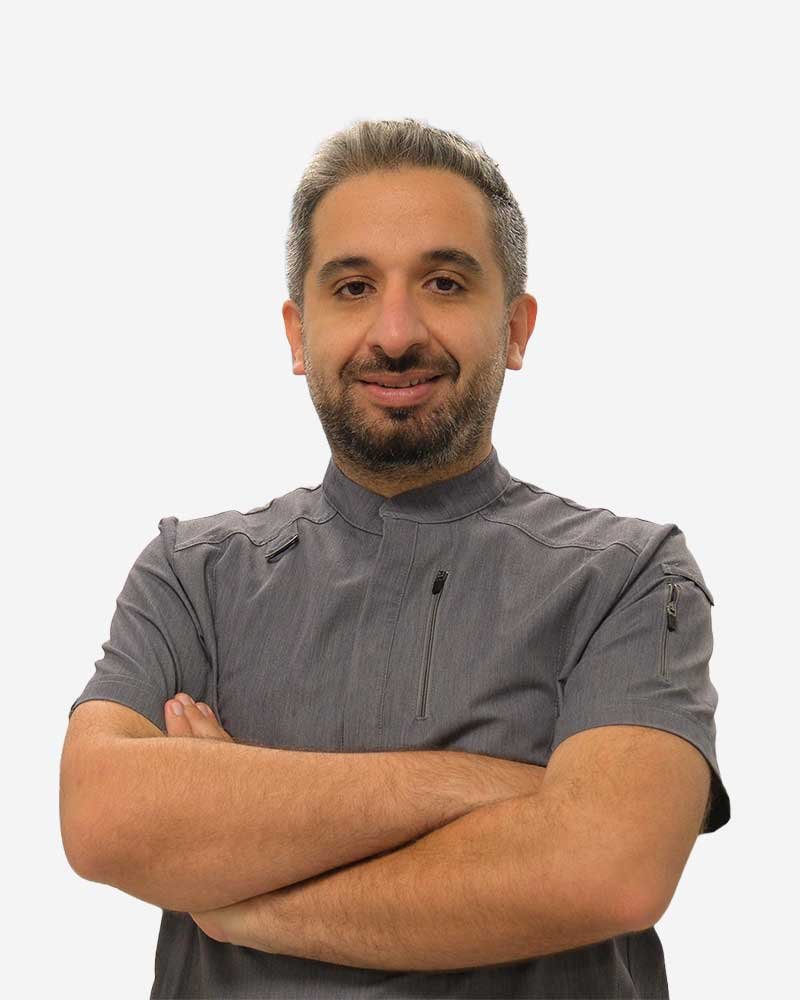
General surgeon specialising in obesity and metabolic surgery in Antalya, Türkiye. Trained in bariatric surgery at the Cleveland Clinic (USA), recipient of the EAES Fellowship Award 2018, IFSO member, co-author of 40+ peer-reviewed publications. Full profile →
FAQ
Thyroid & breast surgery — frequently asked questions
Are most thyroid nodules cancerous?
No. Thyroid nodules are very common and the great majority are benign. Ultrasound features and, where indicated, a needle biopsy are used to identify the small proportion that need further attention.
Will I need to take medication after thyroid surgery?
If the whole thyroid is removed, lifelong hormone replacement is required, taken as a single daily tablet with periodic blood tests to adjust the dose. If only part is removed, the remaining tissue is often sufficient, though thyroid function is still checked afterwards.
Will thyroid surgery affect my voice?
Temporary hoarseness or voice tiredness is relatively common in the first weeks, as the nerve to the voice box lies immediately behind the gland and can be irritated by handling. Lasting voice change is uncommon. Protecting this nerve is a central part of the operation.
Does every breast lump need to be removed?
No. Once a lump has been confirmed benign and is not causing symptoms or growing, it can often simply be monitored. Removal is advised where the diagnosis is unclear, the lesion is enlarging, or it causes discomfort or distress.
Will there be a visible scar on my neck?
Thyroid surgery is performed through an incision placed within a natural skin crease at the base of the neck, which makes it far less noticeable once healed. Scars are red at first and typically fade substantially over six to twelve months.
What happens if the biopsy shows cancer?
Treatment is then planned by a multidisciplinary team, which may include oncology, radiology and pathology alongside surgery. Surgery is one component of that plan rather than the whole of it, and the sequence depends on the type and stage of disease.
How long is recovery after these operations?
Most breast procedures allow a return to desk work within about a week. After thyroid surgery, one to two weeks is typical, with neck stiffness for a few weeks and avoidance of heavy lifting for around three to four weeks.
Related Treatments
Other general surgery treatments
Found a lump, or have an ultrasound result?
Send your ultrasound, biopsy or blood test results with your symptoms. Dr. Habibi will review them personally and explain what they mean and what, if anything, needs doing.
Message on WhatsApp